

Collaborative Design for Complex Systems: Conflict Management Capability
'In complex projects, we provide disciplined coordination, systematic approaches, and dependable technical assurance.'
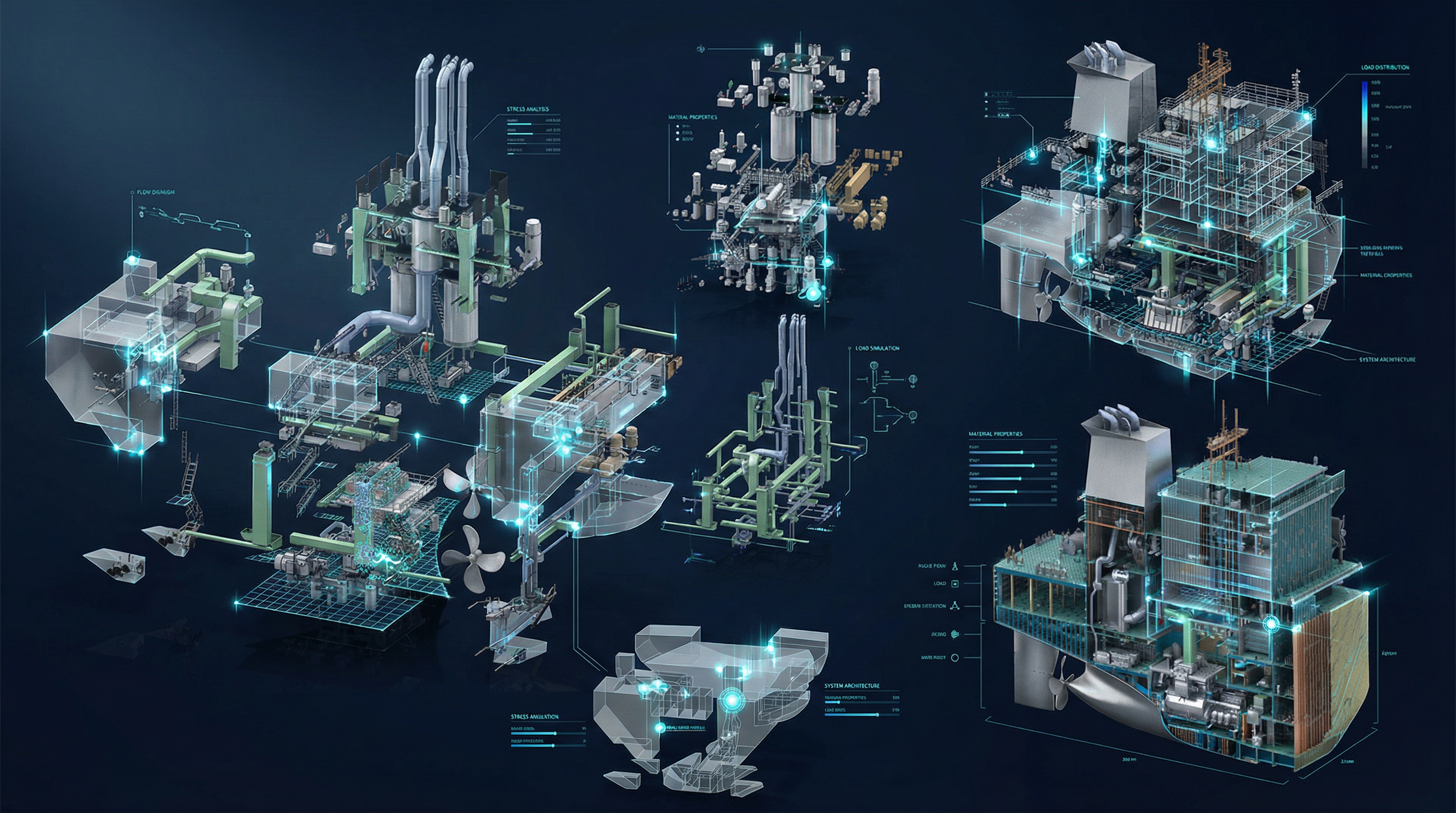
Modern engineering projects typically involve highly coupled systems across multiple disciplines, where local changes in one specialty may trigger cascading impacts on the overall system. Traditional discipline-oriented design approaches often suffer from delays and inconsistencies in information exchange and interface management, resulting in spatial conflicts and interface mismatches that surface late in the project lifecycle. To address this, we have strengthened collaborative design and conflict management capabilities within our digital design framework.
Using a unified three-dimensional model as the shared data backbone, and by explicitly defining spatial semantics and interface constraints, multiple disciplines can conduct parallel design activities within a common technical environment. Design outputs from different specialties are no longer isolated drawings, but continuously evolving components within a shared model that are subject to ongoing validation. Systematic clash detection and issue-tracking mechanisms enable spatial interferences, functional conflicts, and logical inconsistencies to be identified and resolved in a timely manner.
This collaborative mechanism improves not only efficiency, but also the overall constructability and coherence of the design. In complex projects, every resolved design-stage conflict represents a reduction in construction and operational risk. This capability has been validated in full-spectrum vessel projects and provides robust support for the orderly execution of multidisciplinary design activities.
