

Rapid Prototyping: Supporting Early-Stage Technical Clarification and Requirement Alignment
‘Our focus is not on drafting drawings, but on reducing uncertainty early in the project lifecycle.’
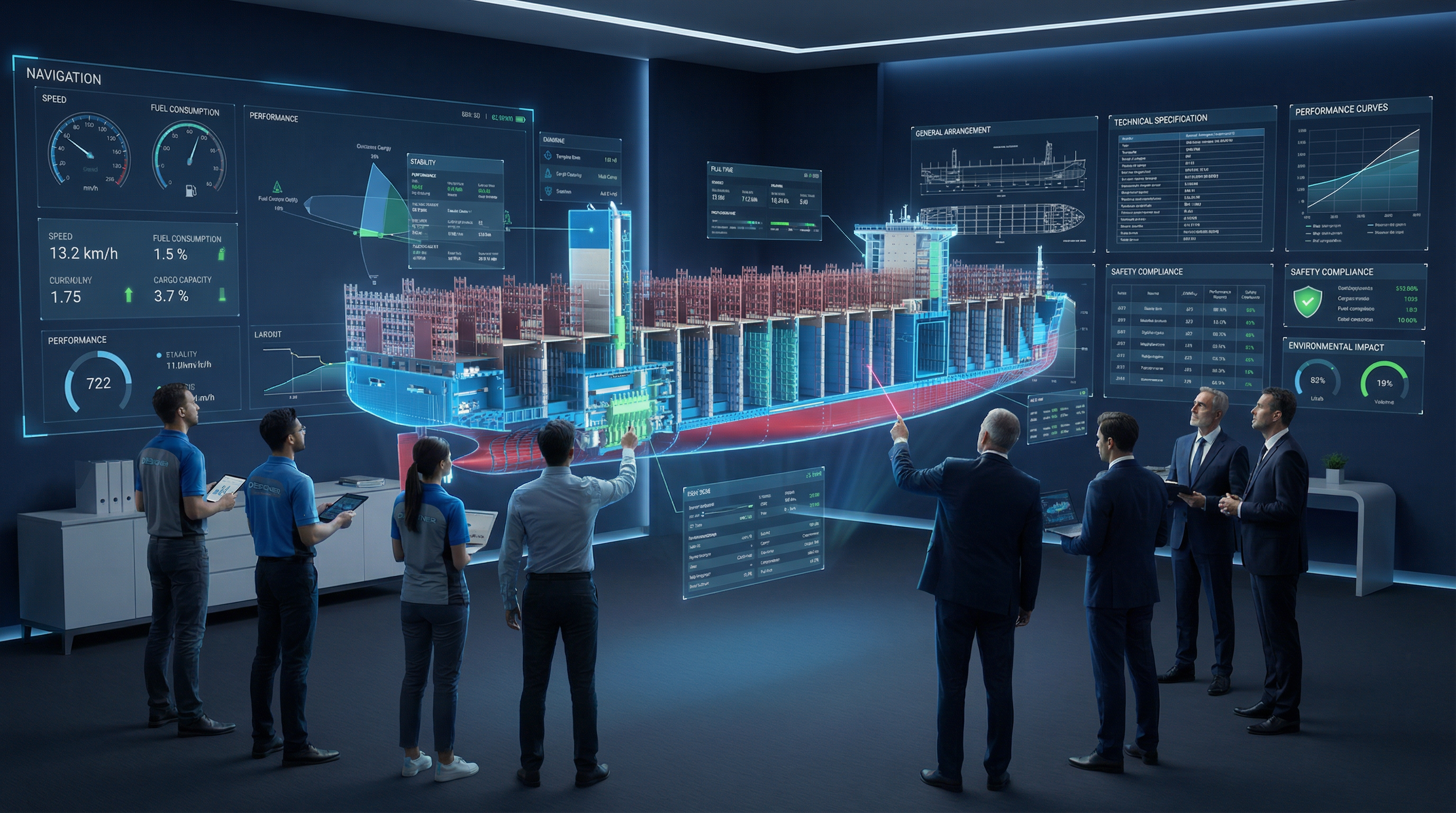
In the early stages of engineering projects, requirements are often high-level, ambiguous, or interpreted differently by various stakeholders. Traditional technical communication methods based primarily on textual descriptions and two-dimensional drawings are insufficient to convey complex spatial relationships, system configurations, and key constraints, which may amplify uncertainty in subsequent design phases. To address this challenge, we have established a rapid prototyping capability centered on three-dimensional models to support more effective technical clarification and requirement alignment at the project outset.
Through parametric modeling and modular configuration techniques, conceptual-level 3D prototypes with embedded engineering semantics can be generated efficiently. These prototypes are not intended to represent fully detailed designs, but rather to focus on critical spatial relationships, functional zoning, system layout logic, and major technical boundaries. By transforming abstract requirements into visual, testable, and discussable representations, the prototypes provide a solid basis for technical assessment and scheme comparison. Multiple design options can be developed and iterated in parallel within short cycles, enabling early validation of different technical routes and avoiding premature commitment to a single solution.
This prototype-driven approach allows the design organization to engage earlier and more deeply in the decision-making process, shifting from passive requirement response to collaborative requirement clarification. By exposing constraints and potential conflicts at an early stage, the risk of major revisions caused by misinterpretation or requirement changes is significantly reduced, thereby establishing a clearer and more stable technical foundation for subsequent detailed design phases. This capability has been applied across full-spectrum vessel projects and has gradually evolved into a reusable methodological framework.
